• NL
  • EN
  • FR
Other information and services: www.belgium.beLogo of the Belgian Federal Authorities
Back to the homepage
  • Lifestyle
  • Science
  • Culture
  • International
  • Business
  • Sport
  • Lifestyle
  • Science
  • Culture
  • International
  • Business
  • Sport
  1. Home
  2. Current Page:Study in Belgium

Study in Belgium

Since 1831, the Belgian constitution has granted freedom of education. It forms the cornerstone on which the Belgian teaching system has been built over the years. But, long before the country's independence, Belgium had cultivated a tradition of recognition and dissemination of knowledge. Thus, since 1425, the university of Leuven has participated in the intellectual emancipation of some of the most brilliant minds of the previous centuries.
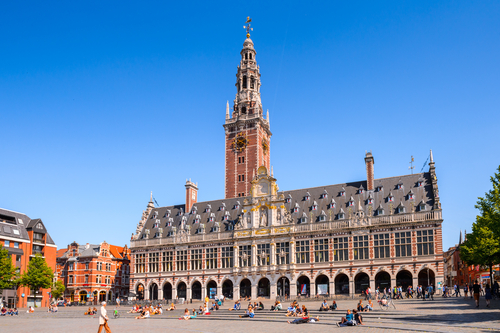
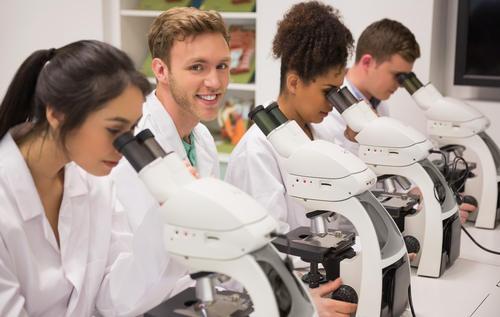
  

From the 19th century, many other universities and higher education institutions were set up on Belgian soil, thus constituting the great treasure of higher education in Belgium, which is the diversity of the education offer available. A large number of internationally famous scientists were produced by these institutes, including four Nobel Prize winners for Medicine, three Nobel Prize winners for Peace, one for Literature, one for Chemistry and, very recently, a Nobel Prize for Physics was awarded to François Englert, Professor Emeritus of the Université Libre de Bruxelles.
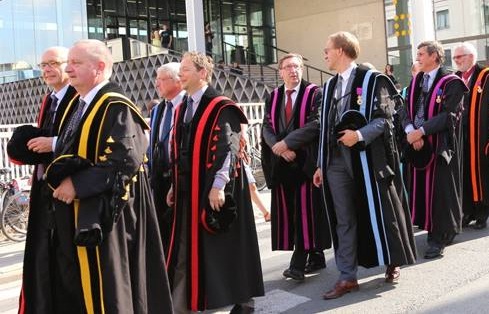
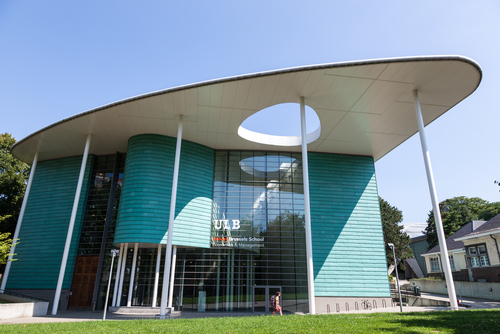
       

Today, Belgian schools are largely focused on international cooperation and are open to the world. Many classes are organised in English and student exchanges have become widespread.

In Belgium, higher education is divided up between universities and higher education institutions (university colleges).

University Colleges are higher education bodies that offer cutting-edge artistic, scientific and technological training that prepares for professions that require high qualifications. They are active in applied research in close contact with the professional world and academia.

  • List of university colleges in Dutch-speaking Belgium, French-speaking Belgium and in German-speaking Belgium.
  • List of colleges of Arts in French-speaking Belgium.
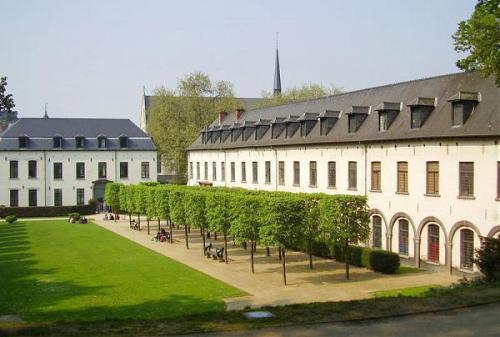
  

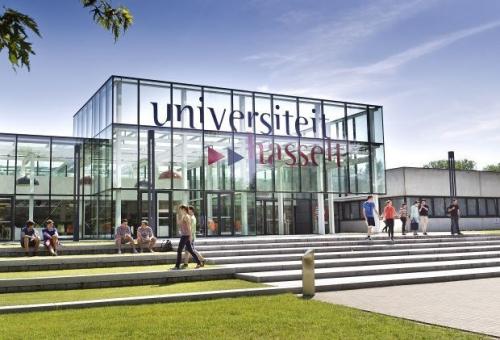
11 universities offer good quality academic teaching. Most of these universities are regularly well referenced in various international rankings, such as the Shanghai Academic Ranking of World Universities, the World University Ranking published by the Times Higher Education and the American Best Global Universities.

  • List of universities in Dutch-speaking Belgium and French-speaking Belgium.
  

RSS

Institutional framework

In Belgium, higher education is the competence of the Communities, which exercise their competence independently. There are three Communities: the French Community (French-speaking part of the country), the Flemish Community (Dutch-speaking part of the country) and the German-speaking Community  (German-speaking part of the country).

Two large education networks co-exist in the country:

  • The official network, for which the organising authority is an entity governed by public law (the three communities, the province, or the municipality).
  • The free network, for which the organising authority is an entity governed by private law. The free network is organised into confessional (mainly Catholic) or non-confessional (mainly in higher education) sectors.

Conditions for entering Belgium

If you are a citizen of a non-EU country, you may require a visa to enter Belgian territory. If this is the case, you must contact the Belgian embassy or consulate in your country or in a neighbouring country in order to determine whether a visa is required. You will find further information on the website of the FPS Interior, Immigration Office.

Study grants

The Belgian Development Cooperation website provides a list of the bodies which offer grants or work placements.

With a view to promoting scientific and technological cooperation, the Federal Science Policy (BELSPO) provides grants for 6 to 18 months for highly qualified researchers from outside the EU. Conditions for obtaining these grants are presented on the Belgian Science Policy website.

You will find further information on study grants in Dutch-speaking Belgium and in French-speaking Belgium.

Accommodation

A large number of higher education institutions and universities provide rooms for their students or lists of rooms available in the surrounding area. Therefore, the best solution is to contact the school or the university for further details.

Equivalence of diplomas

Is my diploma recognised in Belgium and does it allow me access to different types of education? Here are some questions to which you will find a precise answer on the website ENIC-NARIC.

The NARIC-Flanders website provides information about the equivalence of overseas qualifications in the Flemish Community. The Equivalences Service manages the equivalence of foreign secondary and higher qualifications in the French Community. If you want to know if your university degree is recognised in the French Community in the same way as in the country where you obtained it, consult the French Community website. Finally, on the German-speaking Community’s website, you will find information about studying in German-speaking Belgium.

European programmes

Students from a European Union country have the opportunity to pursue their studies in another country thanks to different European programmes:

  • Comenius (for schools)
  • Erasmus (for higher education)
  • Leonardo da Vinci (for professional training and teaching)
  • Grundtvig (for adult education)
  • Jean Monnet (to promote teaching and research on European integration)

Full information about these different programmes can be found on the European Commission's website.

Further information

Your best guide for education in the Flemish Community is the website Study in Flanders. The website Study in Belgium will provide you with an overview of study opportunities in French-speaking Belgium.

Federal Public Service Foreign Affairs, Foreign Trade and Development Cooperation 

www.diplomatie.belgium.be

  • Belgians
  • Did you know?
  • Events
  • Pictures
  • Videos
  • Pressroom
  • Newsletter
  • Contact us
  • About us
  • Disclaimer
  • Protection of personal data
  • Cookie policy
  • Accessibility statement